What a Door Has to Do: Security, Weather, and Energy
A front door looks like one product, but it's really solving three separate problems at the same time.
September 15, 2026 · 4 min read
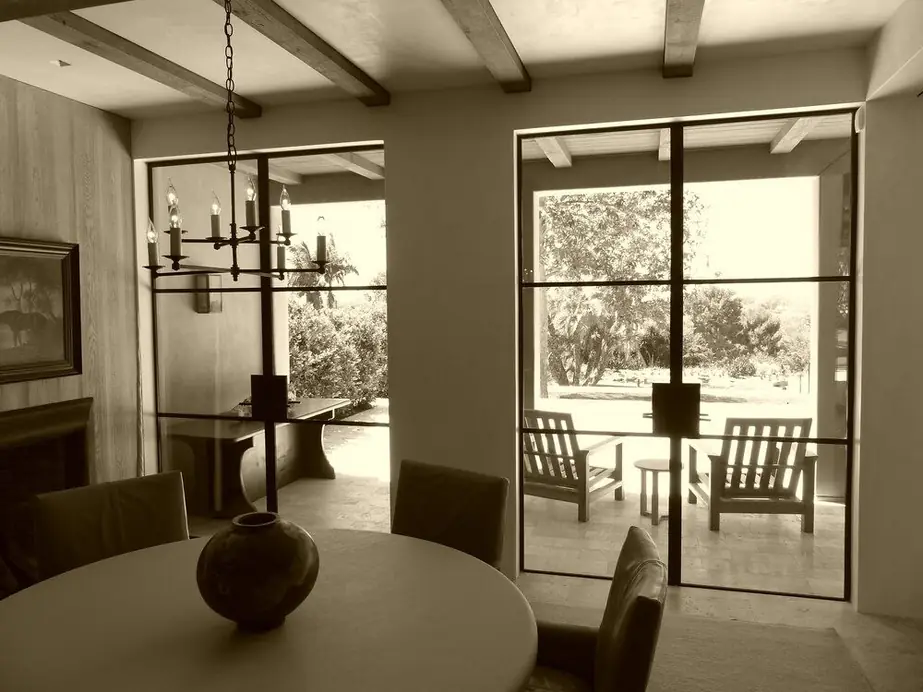
An exterior door has three jobs, and most people only think about the one they can see. It has to look right, sure, but underneath that it's also the main barrier between a house and a person who shouldn't be inside, the main barrier between conditioned indoor air and whatever the weather is doing outside, and a structural point in the wall that either holds up over decades or slowly fails. Here's what each of those jobs actually requires.
Security starts at the frame, not the lock
People shop for a deadbolt. The frame and the way the door is hung matter just as much, if not more. A solid-core or steel door in a poorly reinforced frame can still be forced with a well-placed kick, because the weak point was never the door slab, it was the strike plate and the jamb behind it. Multi-point locking hardware, where the door locks at three or more points along the frame rather than just at the handle, distributes that force differently and is a meaningfully different security posture than a single deadbolt. This is worth discussing with your installer specifically, since correct installation is what makes the hardware do its job.
The lock hardware itself matters more than the brand name on it
A lot of security conversations stop at deadbolt versus smart lock, which skips over the more important question: how many points does the door actually lock at, and how is that hardware integrated with the door and frame you've chosen. A retrofit smart lock added after the fact doesn't always integrate as cleanly with a multi-point system as hardware specified for that door from the start. If a smart lock matters to you, raise it before the order goes in, not after the door has been delivered.
Weather resistance is about the seal, every time the door moves
A door isn't a wall. It's a moving part in the wall, which means it has to seal effectively thousands of times over its life, not just once at installation. Weatherstripping wears, sweeps at the bottom of the door compress over time, and a coastal climate with salt air and wind-driven rain is harder on those seals than an inland climate would be. This is a big part of why we field so many post-installation calls about weatherproofing. It's not usually the door itself failing, it's the seal needing adjustment or replacement as it ages, which your installer can typically handle without replacing the whole unit.
Energy efficiency comes from the whole assembly, not one feature
Glass inserts, the core material, the weatherstripping, and how tightly the door was hung all contribute to how much conditioned air a door lets escape. A fiberglass or steel door with a well-sealed frame will generally hold a tighter seal than an older wood door whose frame has shifted over the years, but the material alone isn't the whole answer. An excellent door hung loosely in its frame will underperform a modest door hung correctly. This is exactly why we talk about installation quality as much as product choice with every customer.
Coastal air asks more of a door than an inland climate does
Salt in the air and the near-constant marine layer along the San Diego coast are harder on hardware, hinges, and exterior finishes than a drier inland location would be. A material like steel, which is naturally more resistant to corrosion in this kind of environment, holds its finish and function differently over a decade than a poorly protected metal would. This is worth raising specifically if your home sits close to the coast or takes direct onshore wind, since the right material choice there decides how the door ages, not only how it looks.
Where the three jobs pull against each other
A door with more glass, which a lot of homeowners want for light, generally has to work harder on the weather and energy side than a solid slab door, since glass is a different thermal performer than a core material. A taller, wider pivot door makes a dramatic entrance but asks more of its hardware and hinge system on the security side than a standard door does. None of this means don't get the glass, or don't get the pivot door. It means going in with your eyes open about the tradeoff, and choosing hardware and installation that account for it.
What to actually check before you commit
- Ask what locking hardware configuration is available for the specific door you're considering, and whether it's multi-point.
- Ask what the frame reinforcement looks like where the strike plate sits, since that's the part that resists forced entry.
- Talk to your installer about weatherstripping maintenance now, so it's an expected part of ownership rather than a surprise call in a few years.
A door that's doing all three jobs well doesn't announce itself. It just quietly works, year after year, and that's the goal worth designing toward from the first conversation.
Builder's Window Supply, (858) 222-6494
Call (858) 222-6494More articles
What New Windows Actually Change in a San Diego House
Before you order anything, it helps to know exactly what a window replacement does and doesn't fix.
The Window Order Mistakes That Cost the Most
A window order has more decision points than people expect, and a few of them are hard to undo once the glass ships.